
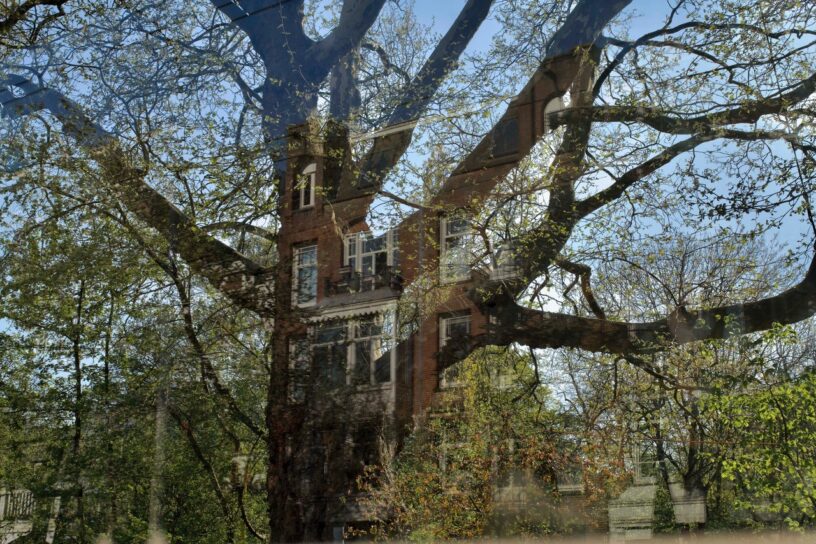
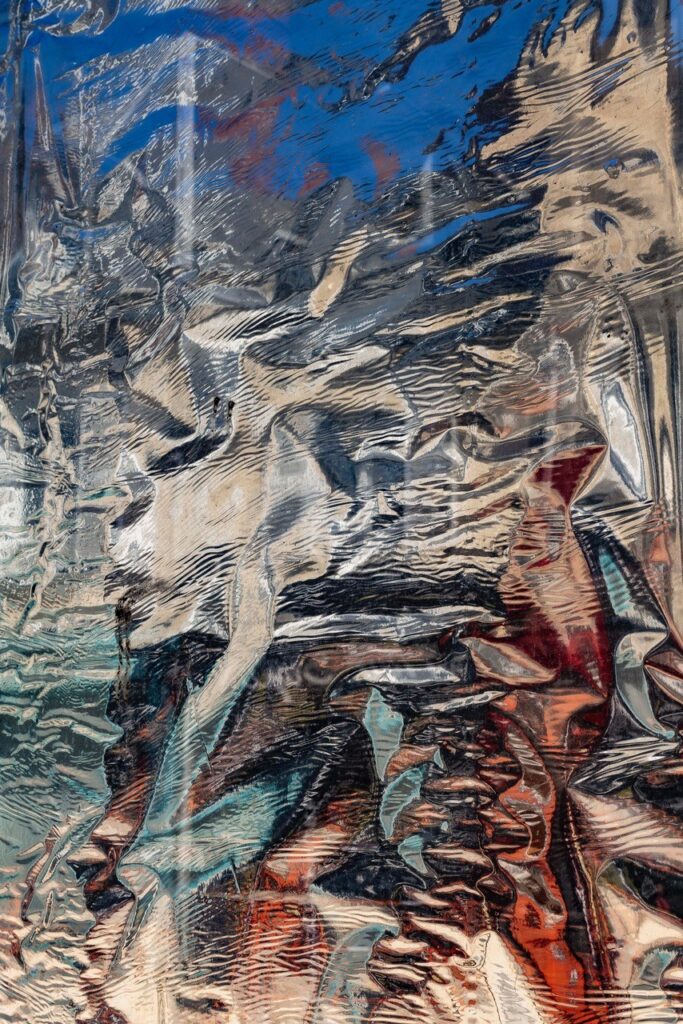
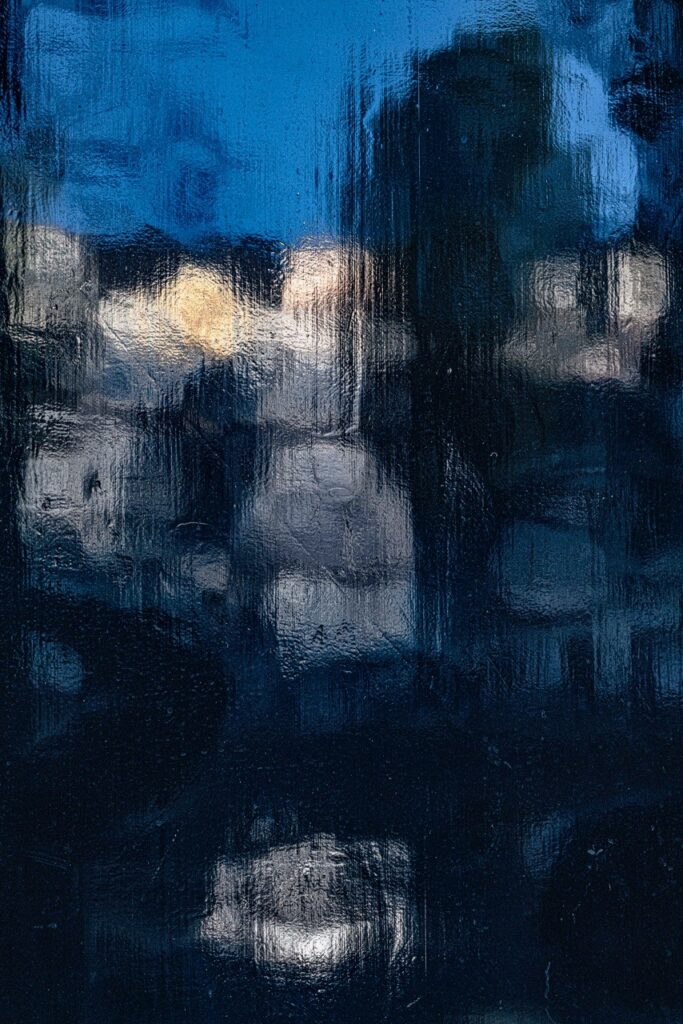
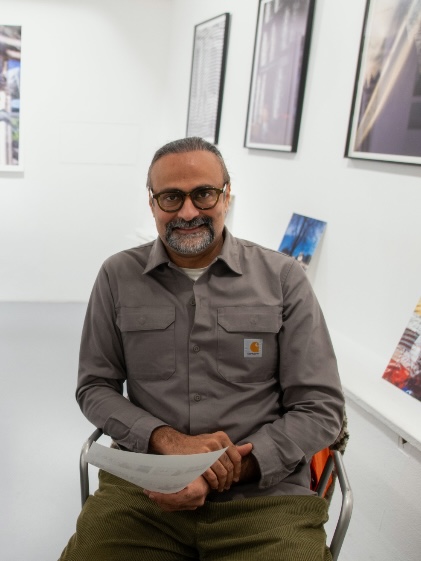
Rajat Singh’s magic-realist images are on display at WM Gallery in Amsterdam. They are reflection photos, it looks like constructed photography, but nothing could be further from the truth. All the photos are shot with a single click. He uses the viewfinder judiciously, however and he also waits for the right moment. Nevertheless, he is often surprised by the results.
I speak to Rajat Singh, whose name means silver lion, in the gallery. In recent years he has been doing reflection photography, he says. Thus, he captures a magical world that exists all around us—usually in the city—that we don’t see at first glance.
Surreal patterns and textures
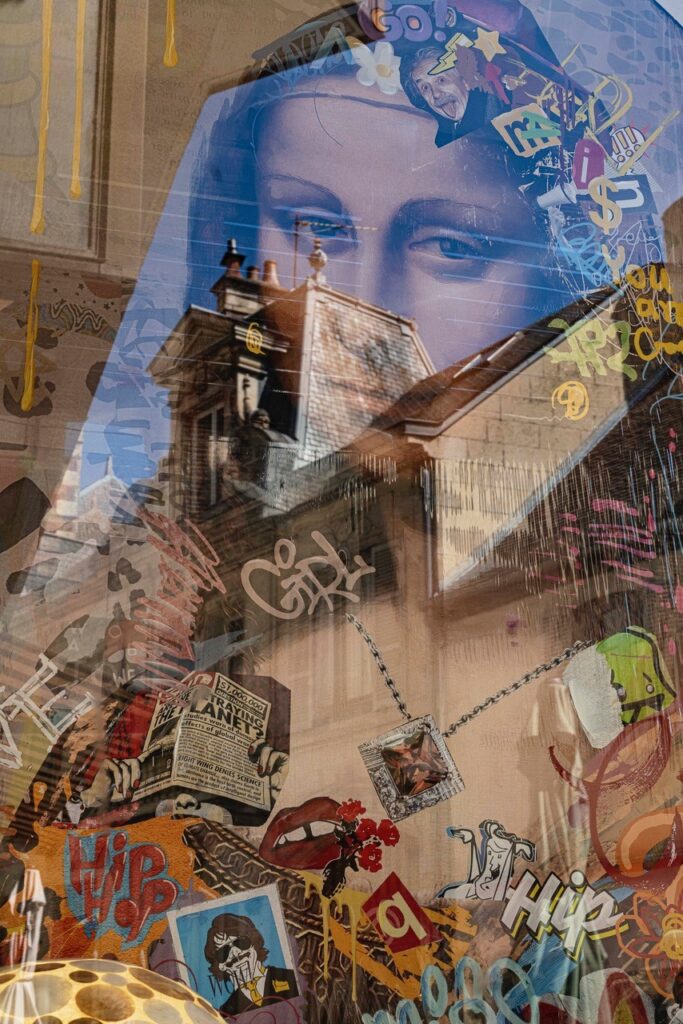
Rajat: “But when you start poking around, you’ll see all these surreal images that result from unnatural overlapping of images, creating these strange patterns and textures, resulting in a whole new aesthetic. All the patina, the grime, the glints—they all become ornaments in my photos. Essentially, I want to convey this strange, fantastical world to my audience.”
He’s been photographing for 25 years. “I’ve had my share of classic templates and ‘looks’ that photographers love to pursue. I always felt a preference for a different art form, a new territory, a new experience, whether in music, painting, or sculpture.”
While other art forms have evolved over the past decades, photography, he believes, hasn’t kept pace.
“Photography has been a bit stagnant for decades. I’m a bit tired of replicating the same photos. I was drawn to reflection. It creates a completely new aesthetic. There’s so much beauty in the details. The element of surprise is exciting. With reflections, you don’t know what you’ll discover. Sometimes I take a photo and can’t believe how it came about.”
Does he have a key work?
He doesn’t, he says. “All of my photos are special. I see them as equals.” But he does see that his audience has a preference. “People appreciate series of photos of glossy painted wooden doors, for example. The photo almost appears as a painting. Everyone seems to like that. And the audience also likes photos with more than one reflection.”
How does he achieve those different reflections? He finds layers in the camera shot itself, he says. “You have to look for the possibilities. A lot of things have to be right. Usually, overlapping images are too contrasting which doesn’t work so right light setting is important. They also have to be interesting subjects. Often you see three different views.” He tries to keep views free of clutter- signage, traffic, security cameras, and people- as much as possible, he likes the timeless quality it lends, as if time frozen.
Architect
He’s been taking photos for over 25 years. But he’s actually an architect. He earned his master’s degree in architecture at the Sydney University. “I used to do interior design and furniture. And last many years, I’ve been working in heritage, the restoration of Australian buildings from the early 19th century. Australia doesn’t have a lot of old architecture, so the people cherish it.”
As a child, he was artistically active. He sketched and painted a lot. After graduating, he took up sculpting and painting and, ever since, has been a keen admirer of all art forms. “But photography was easier to pursue.”
A closer look
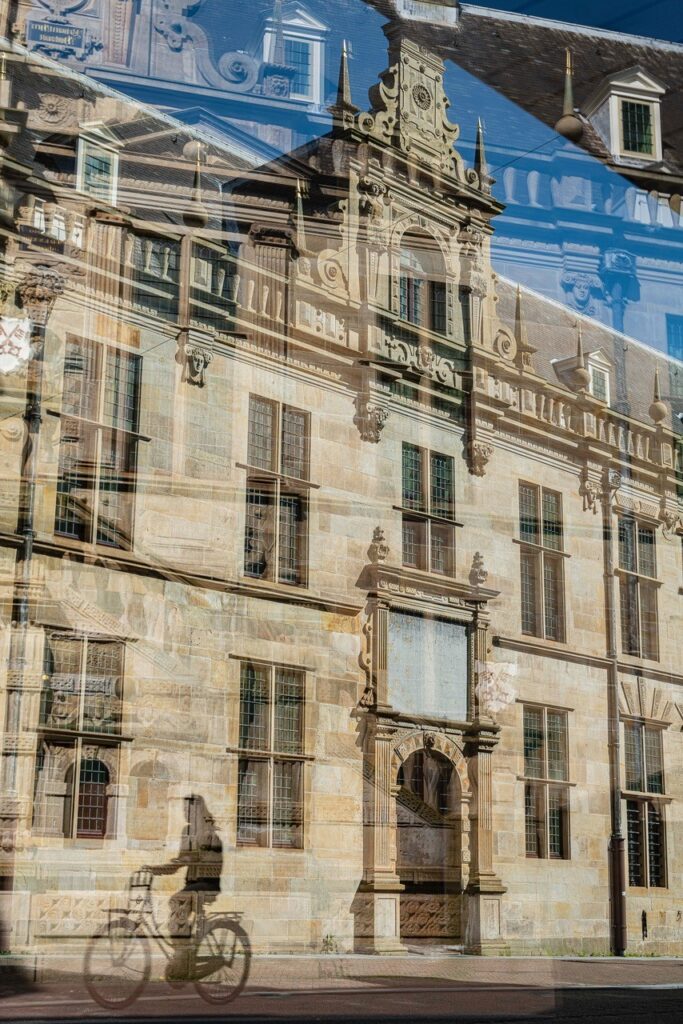
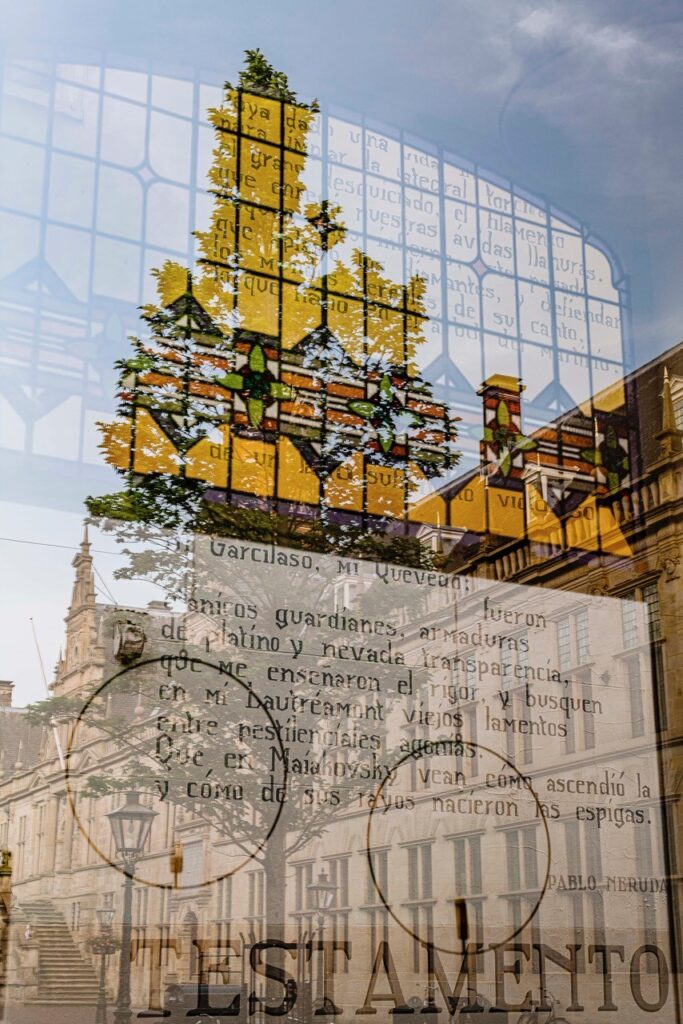
We take a closer look at some photos. The first is a photo from Leiden of a classic building in the city center with the text of a poem by Pablo Neruda projected onto it. It turns out it was shot from a cafe with two windows. You can also see elements of the cafe itself, such as two black round rings and ceiling duct.
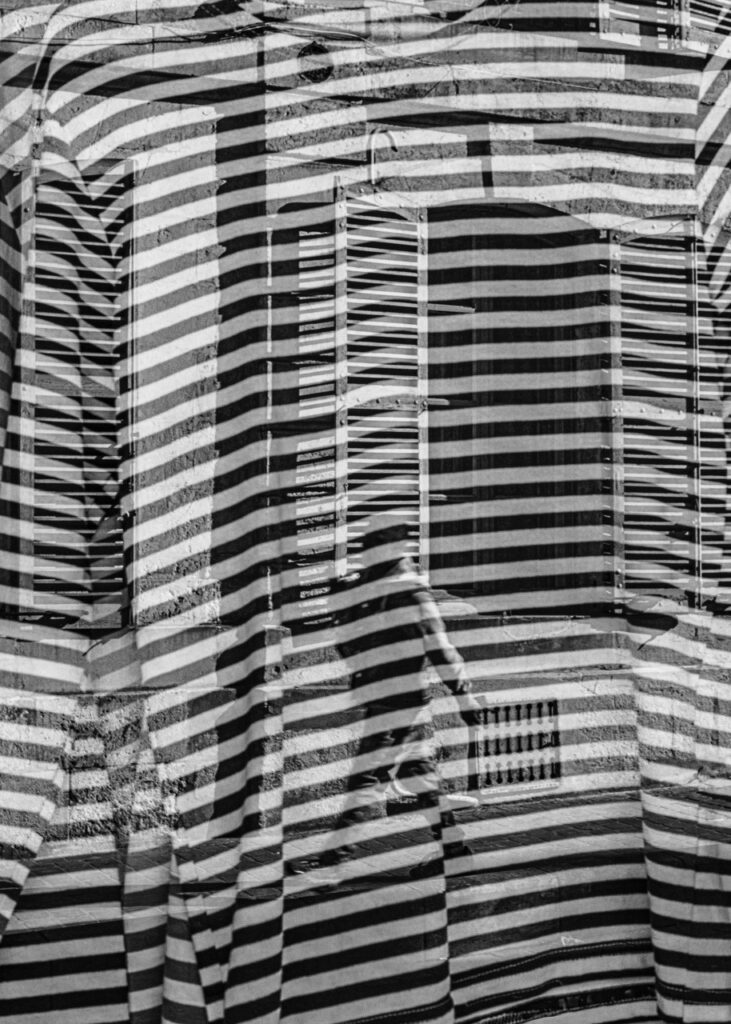
A photo of black and white striped T-shirts. You can see the round collar and the shoulders. The horizontal lines of the shirts are emphasized by the window shutters, which also cast shadows. And yes, there’s a person walking by. “I waited for someone to pass by so I could capture him ‘frozen.'”
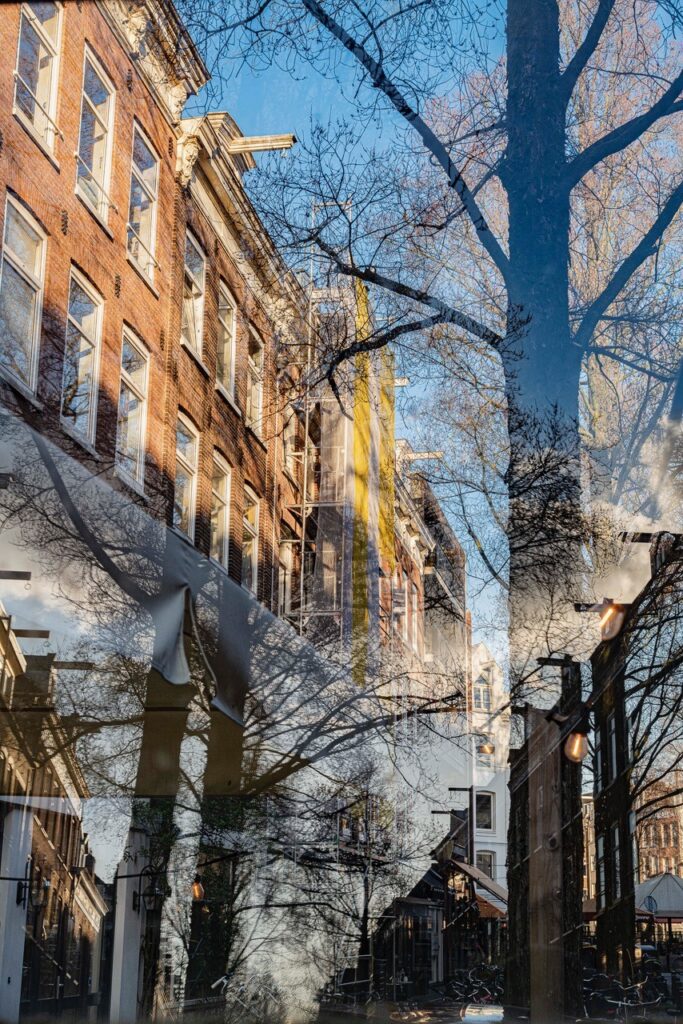
A glossy painted door in blue, white and black. A typical Amsterdam door. The texture of the wood can be seen. We also see raindrops. And even fingerprints of people. It’s like a painting in impressionist style.
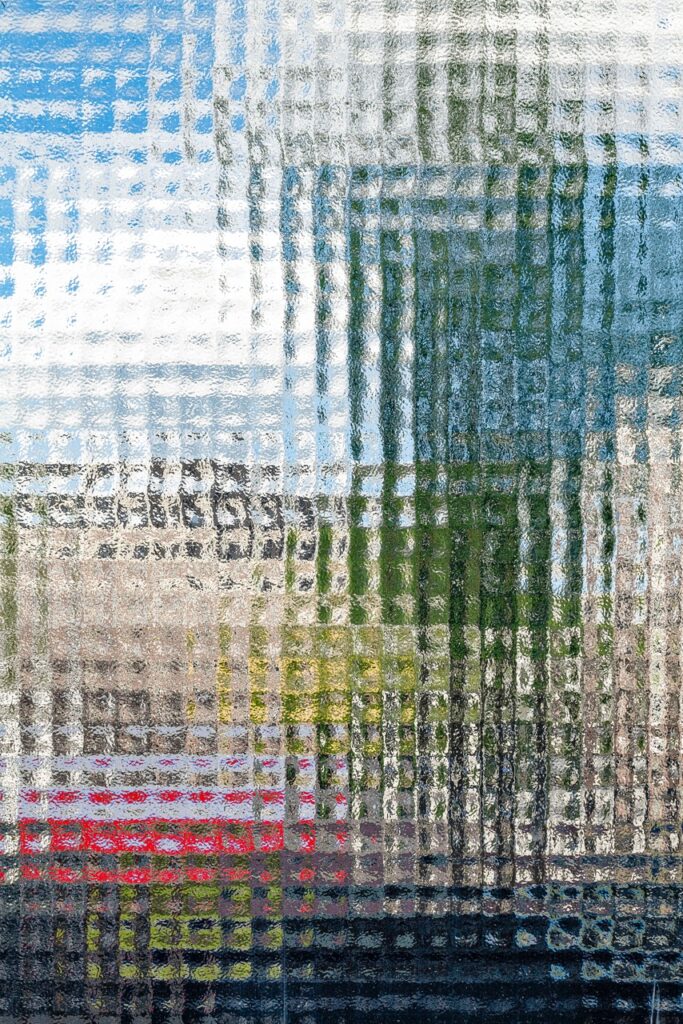
Next to it, the checkered glass of a bathroom in which red, white, green, and blue can be seen. “You can look at it in three ways. One: the total composition, in which, if you look closely, you can see a tree and a cloud. Two: the square mosaic that all look different. Three: In each square, you see complex patterns.”
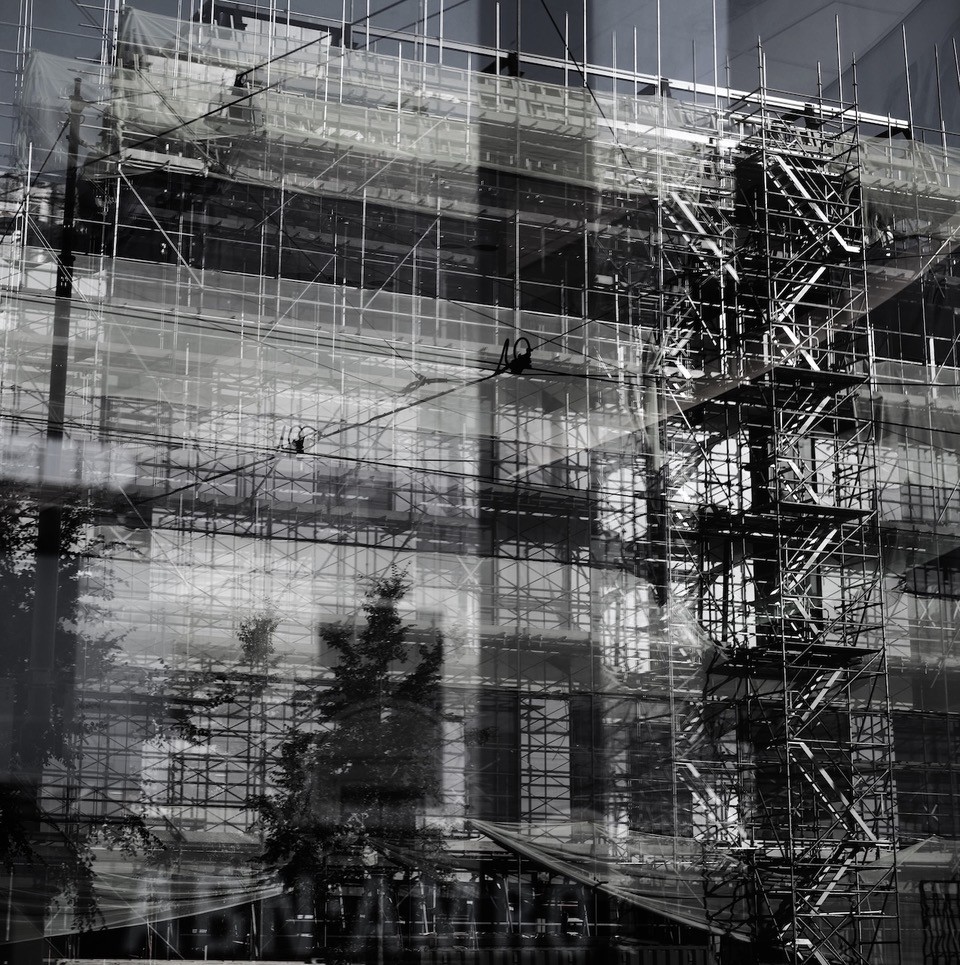
And number five, a photo of the scaffolding of a building under construction. It turns out to be the large, new white building on Leidseplein, Amsterdam, which looks very modern and contrasts somewhat with its surroundings. Rajat doesn’t mind. “I like the contrast with the old architecture.” He took the photo from the ABN AMRO bank building on the other side. You can still see the tram lines. “It’s full of industrial elements. The scaffolding casts shadows, causing all the lines to be doubled.”
Finally, what is his philosophy?
Rajat: “I don’t like photographing beautiful things. I like to find beauty in the mundane. Developing my skills is more important to me than the final product.” He doesn’t let ambition influence his photos. “It’s more of a natural discovery. Sometimes people say, ‘Why don’t you bring some glass? It makes it easier.’ To me, that would be cheating. It’s about what a random environment produces. It’s just like nature; all the beauty is there because it’s random.”


1 Pingback