
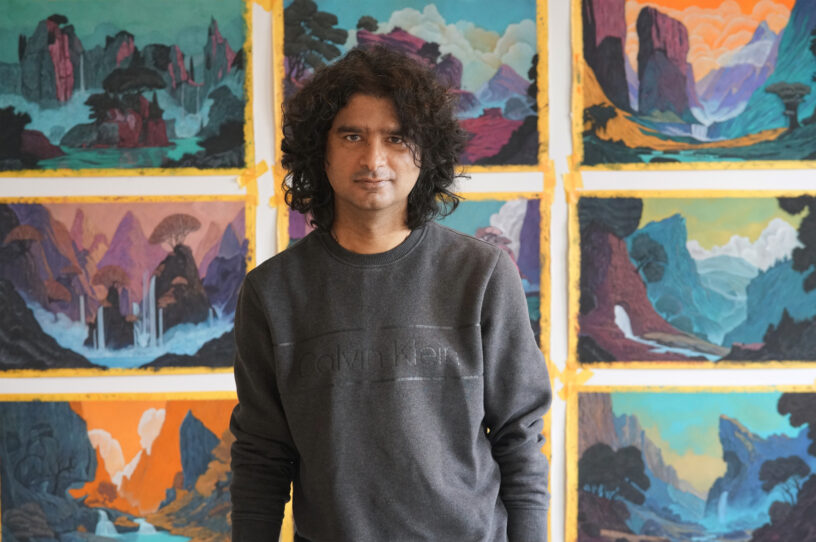

In late March, I was at Art Rotterdam 2026. At the SANAA gallery booth, my eye was drawn to a landscape work in green, blue, purple and orange colours. It depicted mountainous landscapes. The artist, Imran Cjanna, was present and shared some information about these works.
He told me more later about his central theme and the research he conducted.
Narratives
Imran Channa: “The central theme in my work is the politics of storytelling and how the crafting of narratives produces both information and misinformation. For many years, I have been investigating archives and archaeology and their role in knowledge production and modern myth-making.”
He is interested in how narratives are constructed through fragments of artifacts, language, memory, myth, and digital culture, he says. “These elements come together to give a rise to new speculative forms to imagine alternative world different from the one we know. Those alternative worlds feel familiar, yet remain unstable and artificial.
Land and landscape & video games technologies
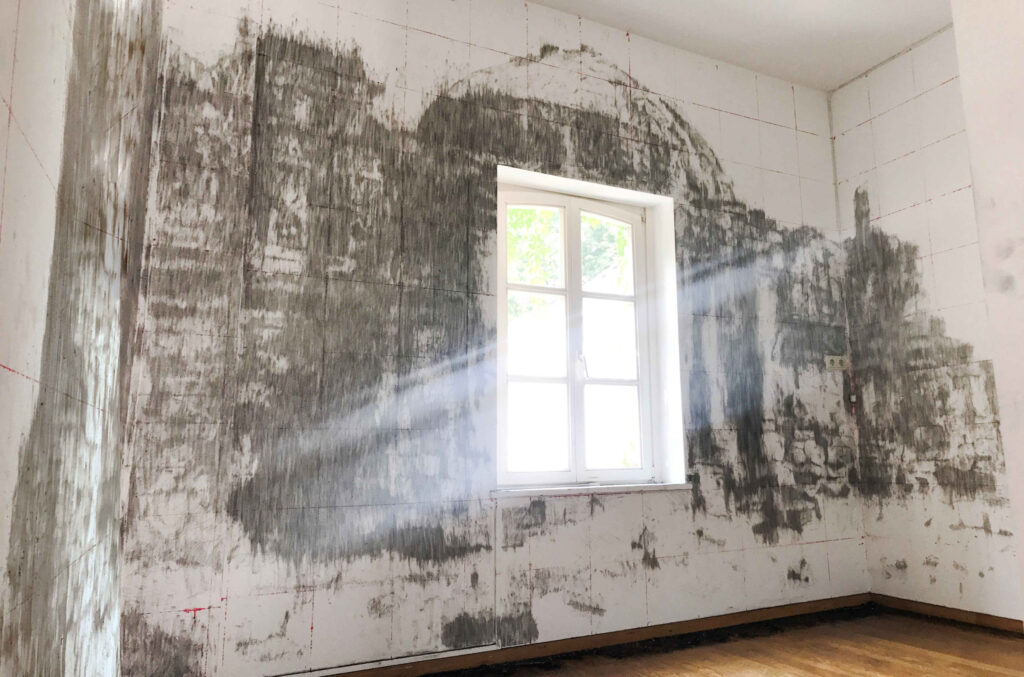
More recently, he has been focusing on the idea of land and landscape, and on how mythic memory can be simulated through video game technologies. “I examine how myth and technology shape belief and knowledge in the post-truth era. I use a wide range of material sources in my projects, ranging from South Asian histories and colonial film archives to natural substances such as holy water, dust, and debris from politically charged landscapes, as well as film grain and digital elements like computer pixels.”
This theme emerges from a need to question how reality is shaped and mediated today. “We are constantly surrounded by constructed narratives through media, technology, and political, religious, and scientific ideologies, and I am interested in how these narratives shape our sense of belonging, identity, and “truth.” Through speculative methods, I construct worlds that oscillate between fiction and reality, creating spaces where viewers can reconsider what feels natural or given.”
Growing Up Inside a Story: Dreamtime and the Making of Narrative
There is also a strong autobiographical dimension to this inquiry. He was born in a small village in Sindh, a region associated with one of the earliest civilizations of the Indian subcontinent, now part of Pakistan. “Growing up, I was immersed in storytelling, folklore, and belief systems rooted in magic and the supernatural. Later, through studying art and history, I began to distinguish between fiction and reality. This shift led me to critically examine how dominant narratives are constructed and disseminated by different power structures.”
Does Imran have a Key Work?
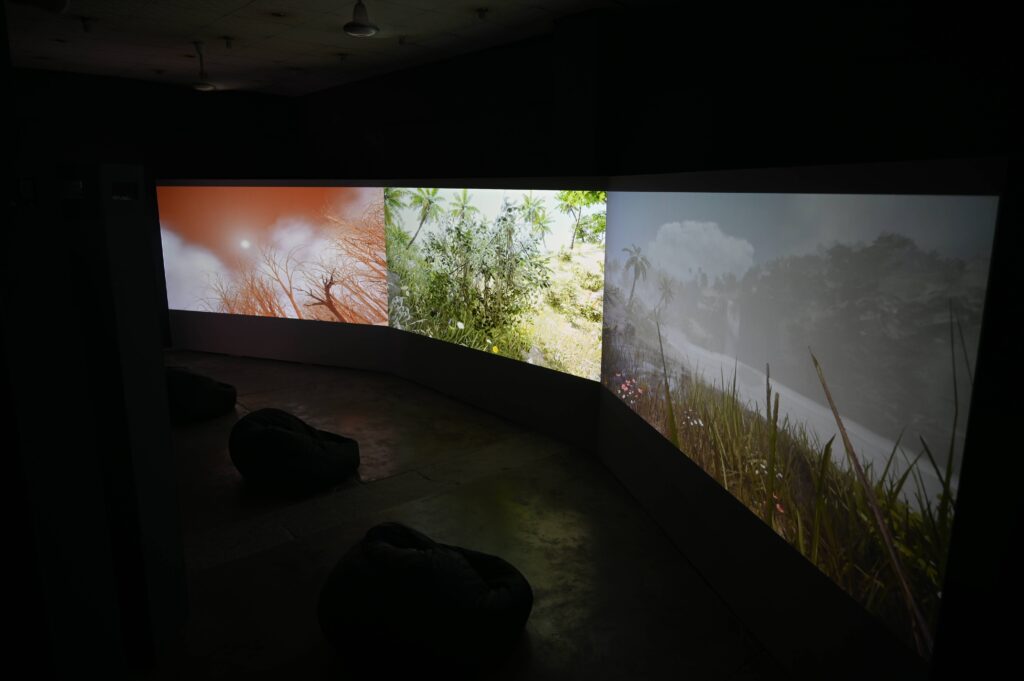
Rather than a single work, he sees his practice as an evolving body of interconnected projects. “However, a key project is Promised Land, developed as a three-channel interactive video game installation.
This project draws on Dutch colonial documentary and ethnographic films commissioned by the Colonial Institute of Amsterdam and preserved in the Eye Filmmuseum archives. These films functioned as early simulations of the world: they mapped, framed, and controlled territories visually, much like video games construct navigable worlds today. They transformed land into images, organized people into types, and rendered exploitation as order or progress, effectively turning territory into a playable map. Without a fixed storyline, meaning in the work emerges through navigation and interaction.
Enchanted Land
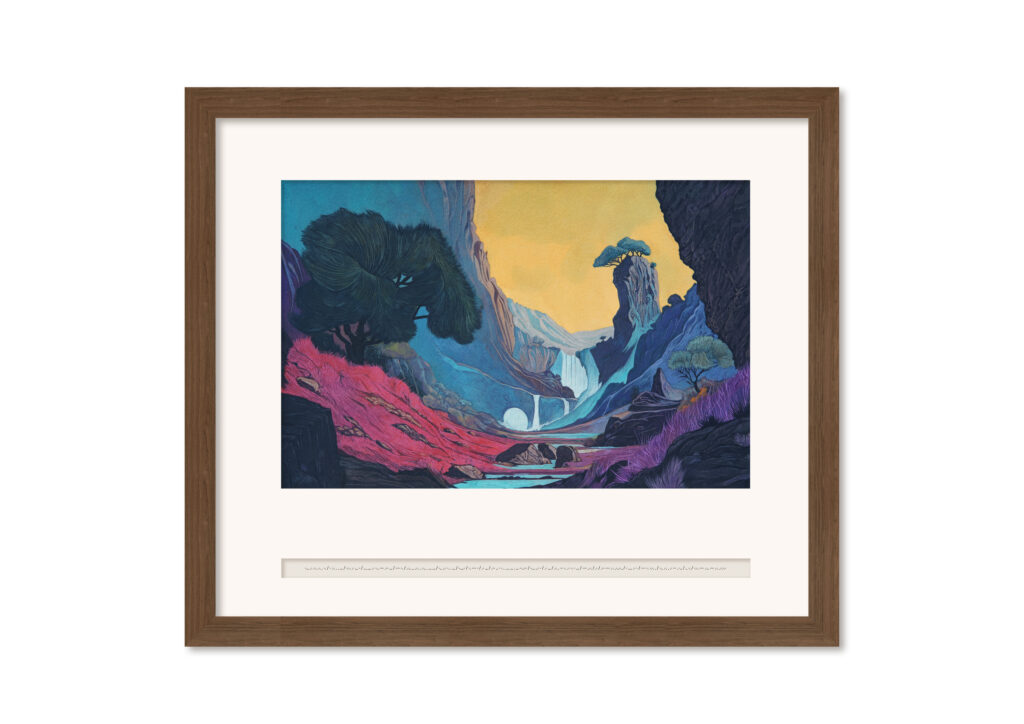
Enchanted Land can be seen as a continuation of this project. “In this series, I explore the idea of a perfect or imagined homeland through a dialogue with AI-generated language and imagery. The works present landscapes that do not exist, yet feel strangely familiar, serene mountains, cascading waterfalls, forests, and visions of an idealized, safe, and beautiful world.”
In search of this dream, he moved to the Netherlands, drawn by its idealized imagery widely circulated in visual culture. “The idea of a perfect homeland, a paradise promised by politicians, religion, and technologists, is often a fantasy forged through histories of violence and exploitation. Yet it remains deeply compelling, especially in a time marked by fractured geographies and geopolitical instability.
Both Promised Land and Enchanted Land bring together my ongoing concerns with fiction-making, political narratives, and the aesthetics of constructed realities.”
How long has he been an artist?
“I have been working as an artist for several years, developing my practice through both formal education and artistic research. I completed my BFA in Painting and MA (Hons.) in Visual Arts at the National College of Arts in Lahore, Pakistan. Later, I joined the Jan van Eyck Academie in Maastricht as an artist-in-residence.
I have also participated in several prestigious residencies and research fellowships, including Harvard University (Boston), Eye Filmmuseum (Amsterdam), Akademie Schloss Solitude (Stuttgart), and Gasworks (London).
My work has been exhibited at major international venues, including the MAX Ernst Museum (Brühl), Eye Filmmuseum (Amsterdam), the European Media Art Festival (Osnabrück), the Museum of Modern Art Algeria (Algiers), Lahore Biennale 03, and Troy House Art (London). I have shown work across Europe, North America, the Middle East, and Asia. These experiences have shaped my interdisciplinary approach and my interest in working across different media and contexts.”
Finally, what is his artistic philosophy?
“I see my practice as a form of ongoing research that questions fixed narrative and belief systems, while creating a space where meanings can shift and re-emerge. I am interested in constructing a “third space” of enunciation where new possibilities and interpretations can unfold. At its core, my work is about politics of storytelling, but not in a linear sense. It is about building conditions where stories emerge, overlap, and sometimes contradict each other.”
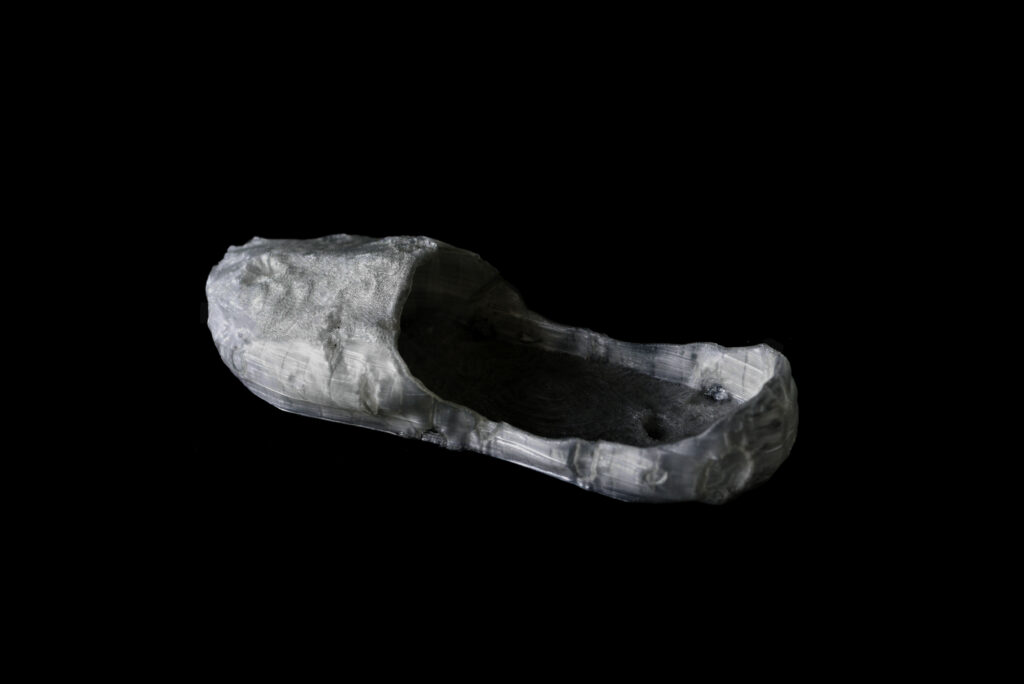
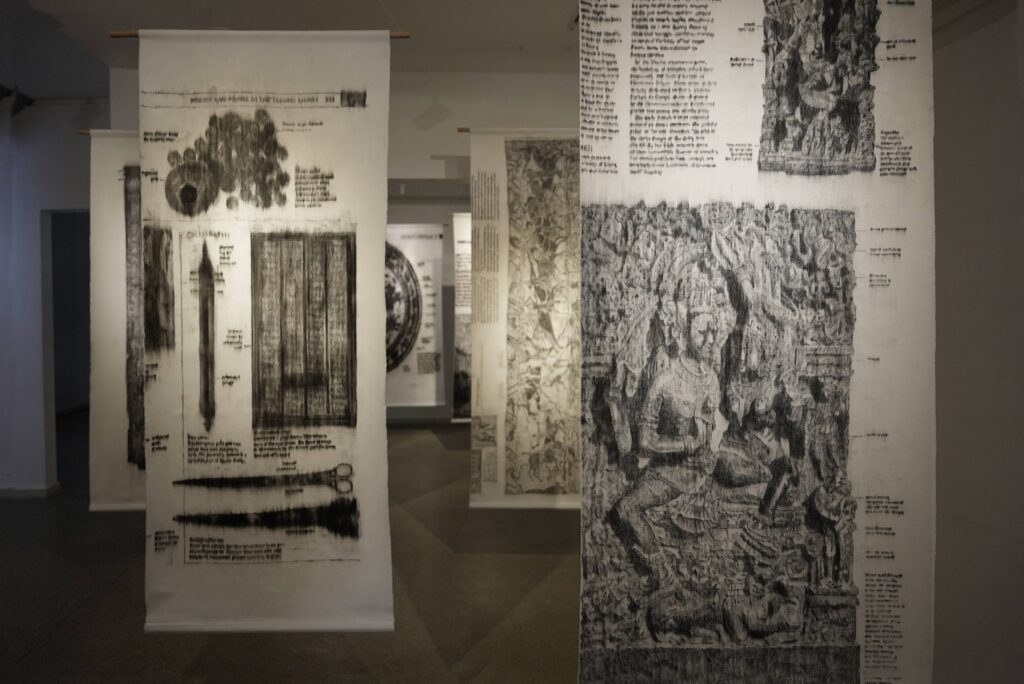
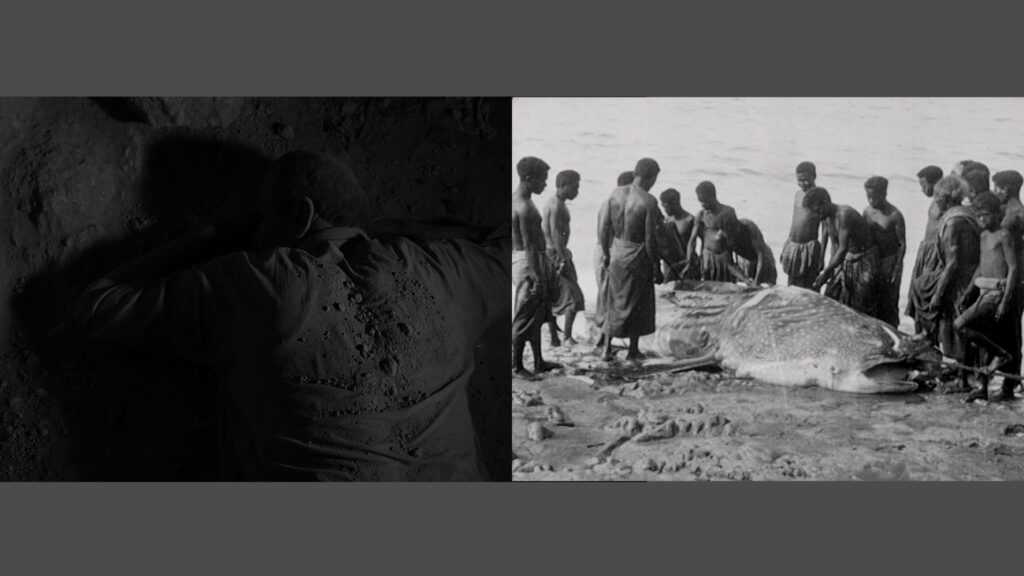
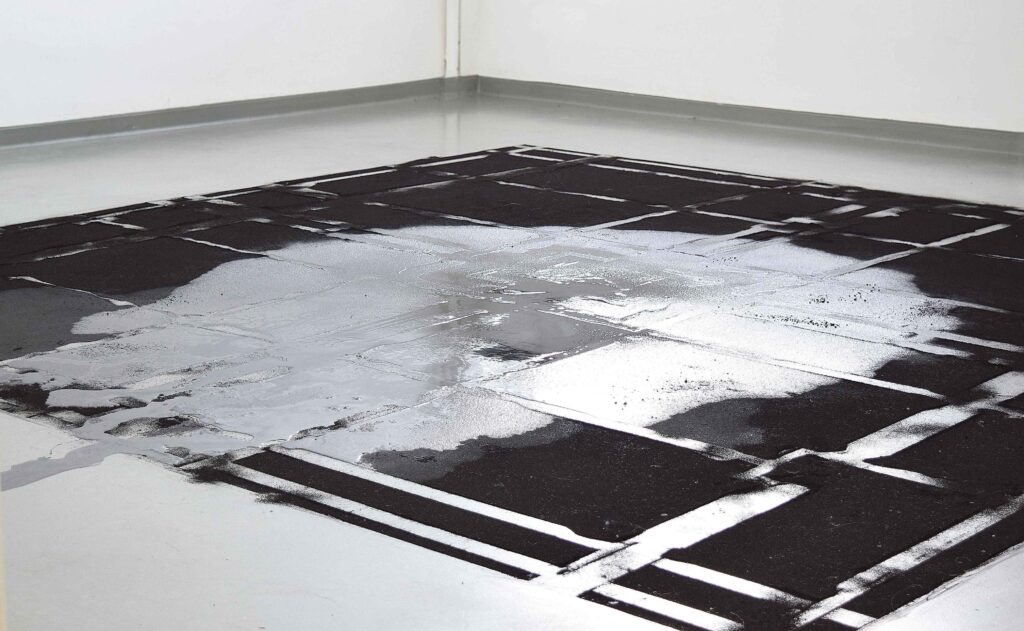
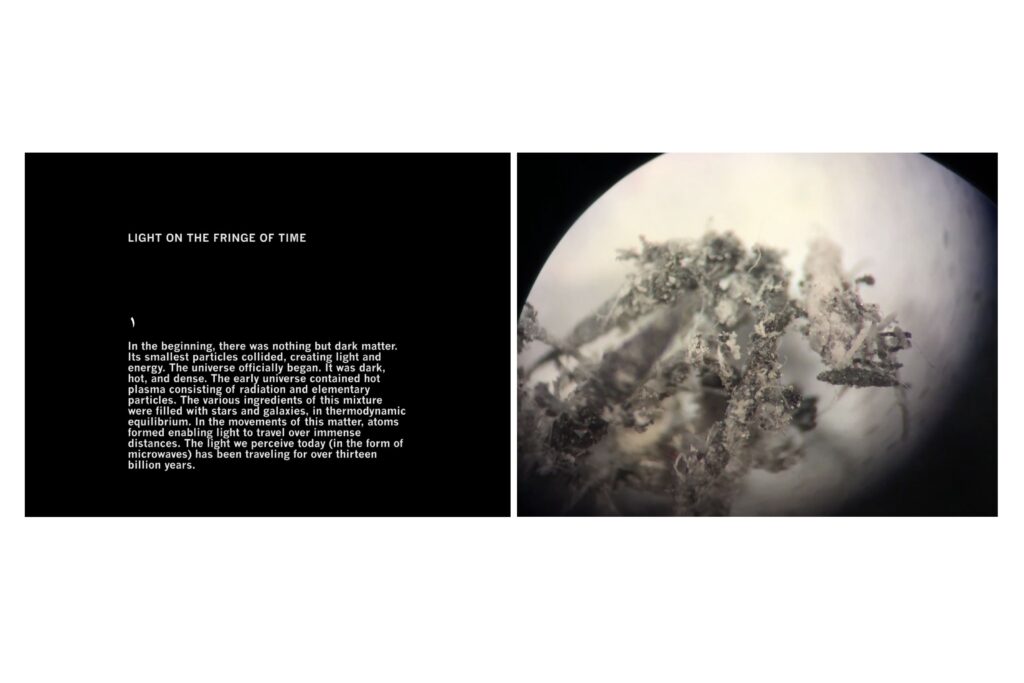
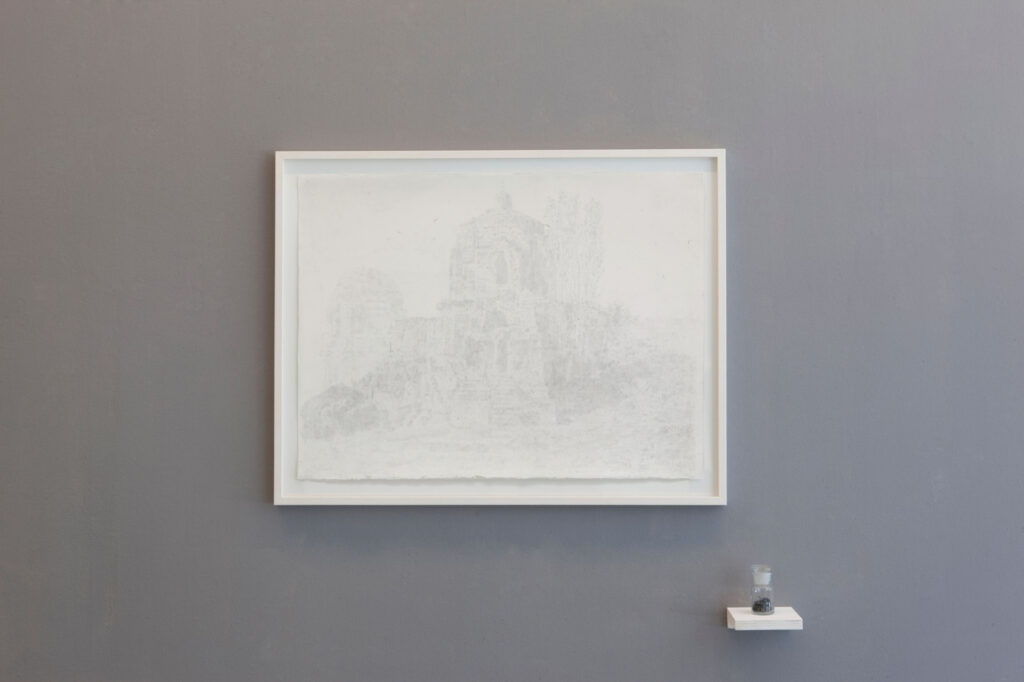
Images: 1) Enchanted Land XVIII 2026 Gouache on paper, Morse code print on paper 57 x 69 cm, 2) Promised Land,( Savage State, Pastoral State, Desolation State ) 2022-23. Three-channel interactive video game installation. (Computer program) Based on Dutch east indies film archives from the collection of EYE Film Museum, Amsterdam. Each Object is made by the artist with Autodesk Maya, Zbrush, Substance Painter, Unreal Engine 4 and programmed the game, 3) Tangible Fiction: Shoe, 2025, 3D print, PVC material Edition: 1/3 +AP , Size: Variable, Sound Track: 00:02:05 min, 4) Lost Pages From One Thousand and One Nights (2021) Installation view: Lost Pages, ii, ii, iii, iv. v,vi, vii, viii, 2021, Charcoal and eraser on canvas, Size: 221x 92 cm (each work). Displayed at canvas gallery Karachi, 5) Holy Ghost (The Materiality of the Invisible), 2017, 305 x 732 cm, Erased drawing on wall, dust/residue of erased drawing on floor, charcoal pencil, Conté crayon, eraser, 6) Portrait Photo Imran Channa, 7) Allegory of Cave Men 2022, Duration: 80 min. Directed, produced, edited and written by Imran Channa, 8) Holy Water, 2018, Size: 500 x 600 cm, Holy water collected from River Jordan (Israel), River Ganges, (India), Well of Zamzam, (Saudi Arabia), Black pigment, water container, silicon pipes, 9) Light on the Fringe of Time, 2017. Two-channel video installation. Right: Erased remnants of drawings from historical documents, filmed under a microscope at the Natural History Museum, Maastricht. Video loop, 6:00 min. Left: Seven short stories written by the artist. Video loop, 4:30 min., 10) Pasts in Particles 2018, Size:140 x 100 cm, Graphite pencil and eraser dust on paper. Glass jars contain erased drawing residue., 11) Order of Objects, iii, 2021. Inkjet print on paper. Size, 105 x 70 cm
https://imranchanna.com/
https://www.instagram.com/studio.imranchanna/
https://www.galeriesanaa.nl/
https://inzaken.eu/index.php/2026/04/07/imran-channa-zoekt-de-derde-ruimte-waar-nieuwe-mogelijkheden-en-interpretaties-zich-kunnen-ontvouwen/


Leave a Reply