
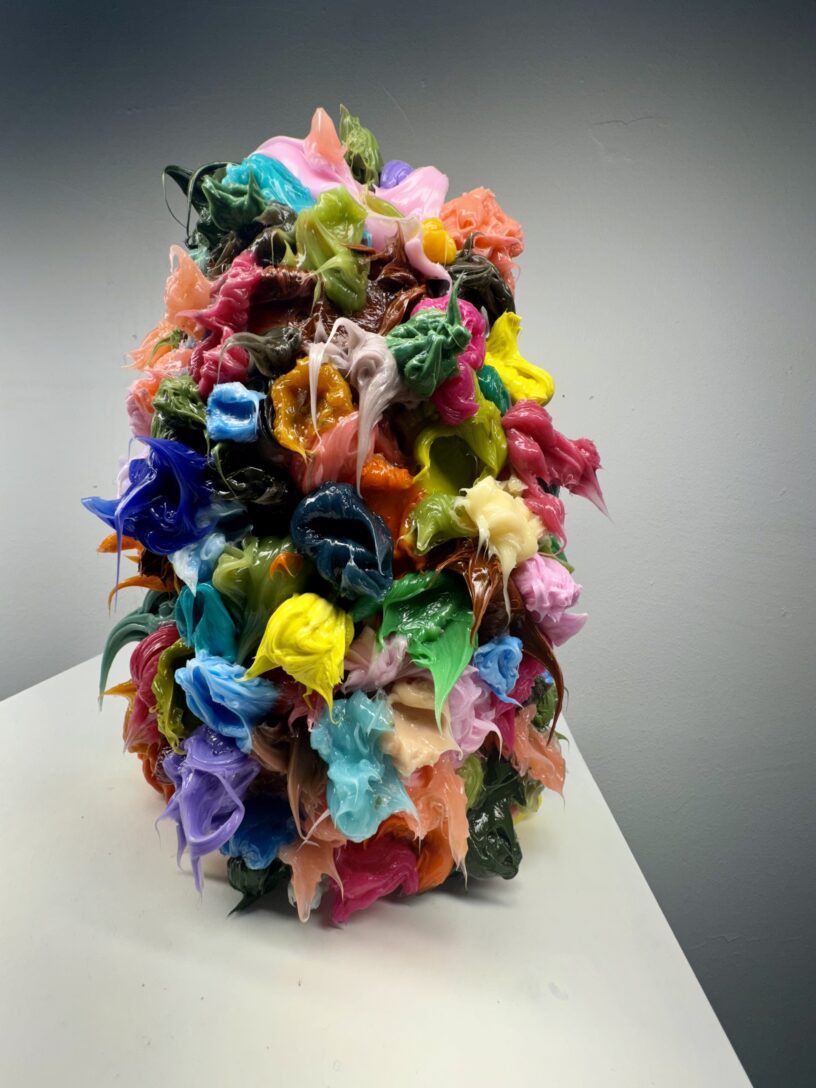
The exhibition Cross-Over was on display at Galerie Wind on Rotterdam’s Noordereiland. This exhibition—curated by Mishmash—brought together artworks and design icons. One of the artists featured was Pedro Cherino, originally from Barcelona. He’s a painter, but he works as a sculptor. I spoke with him on the outdoor terrace of the Wester Pavilion in Rotterdam.
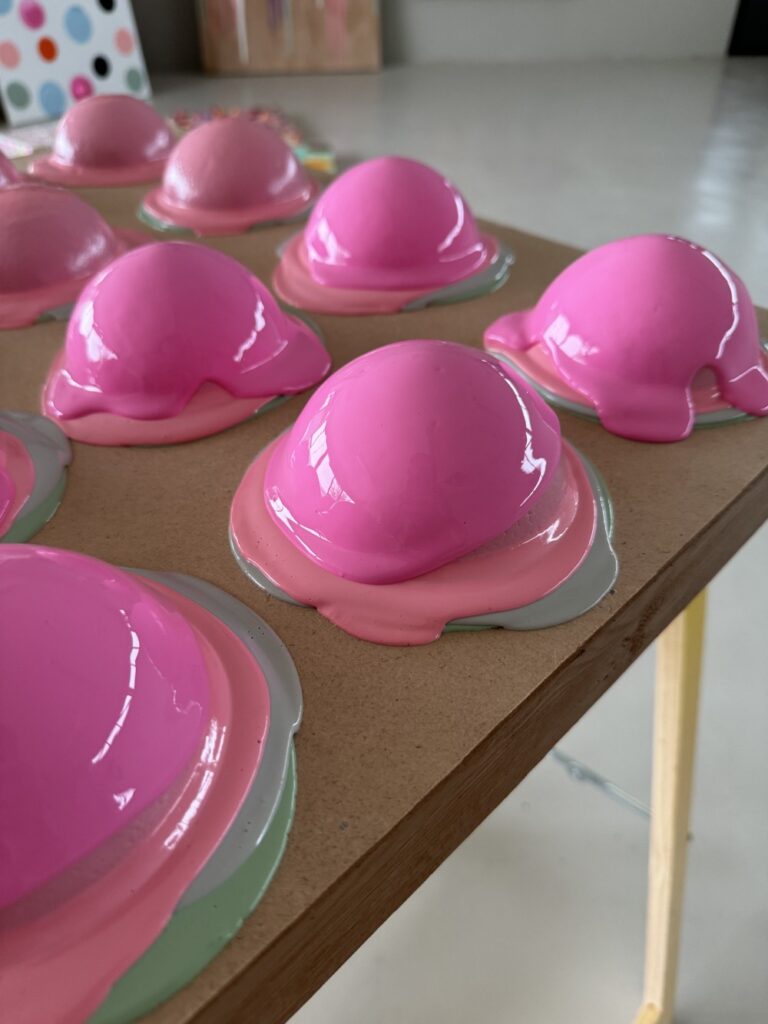
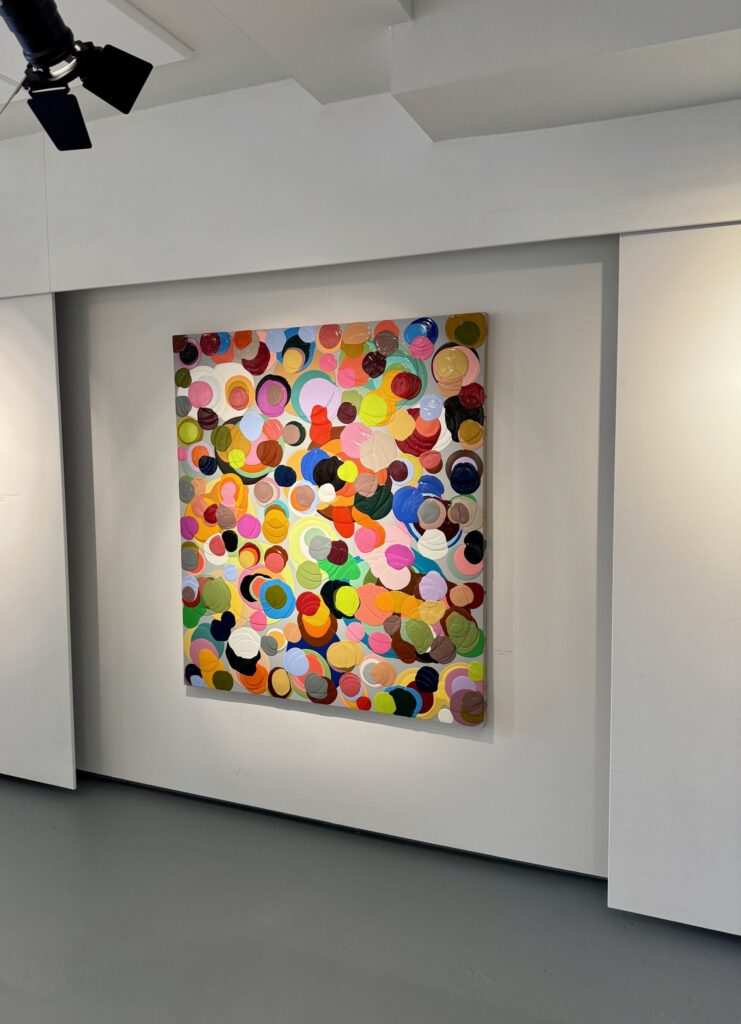
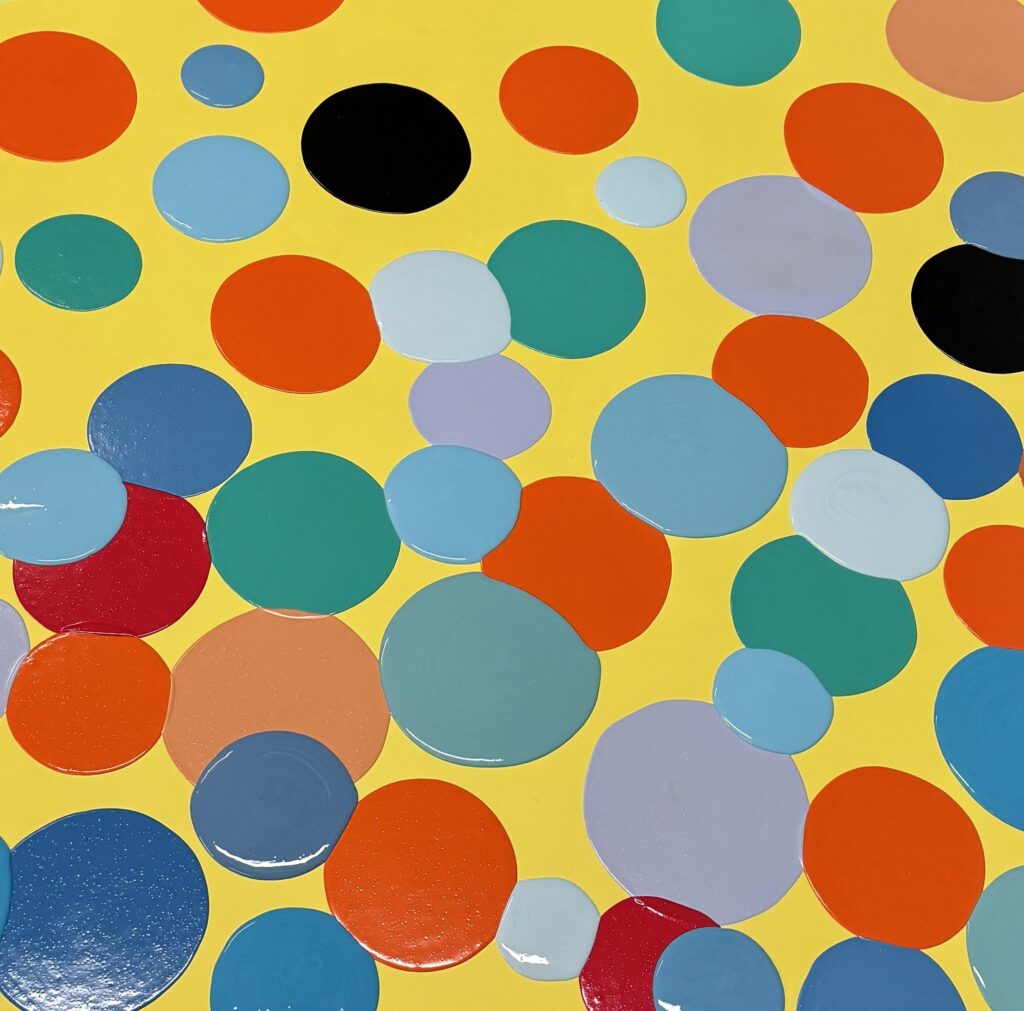
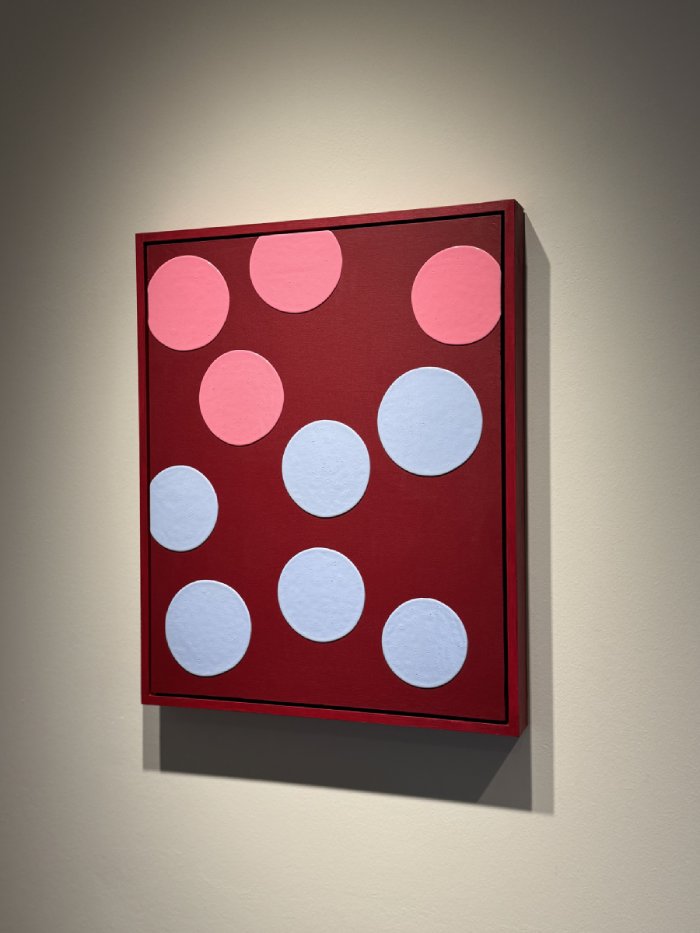
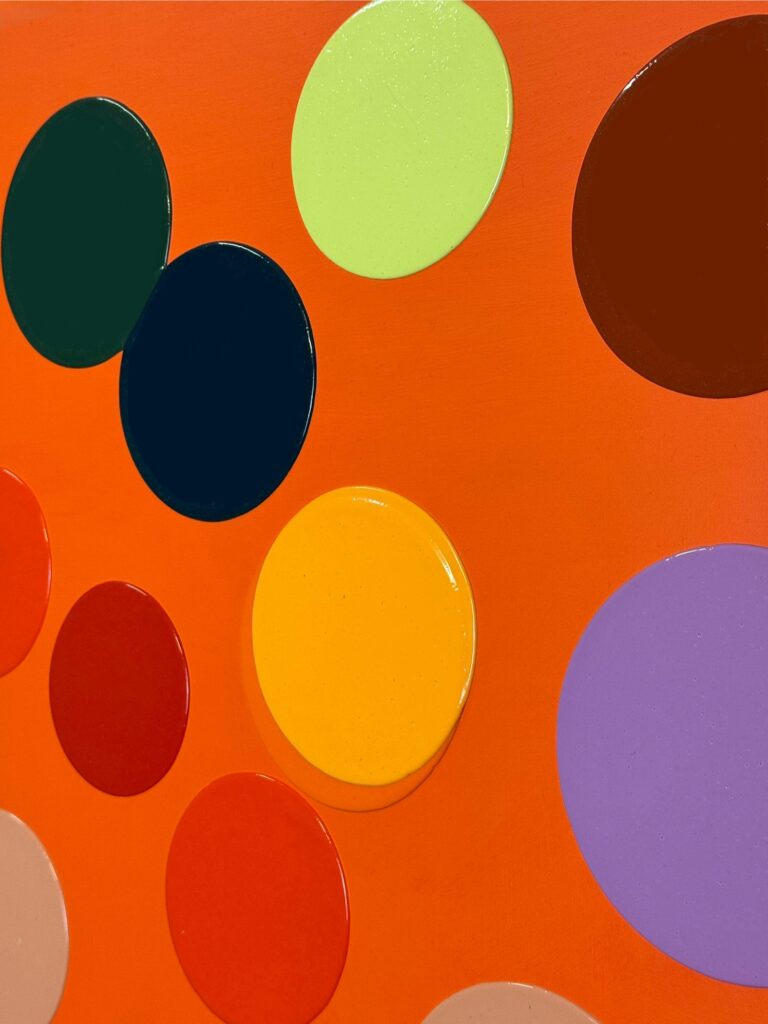
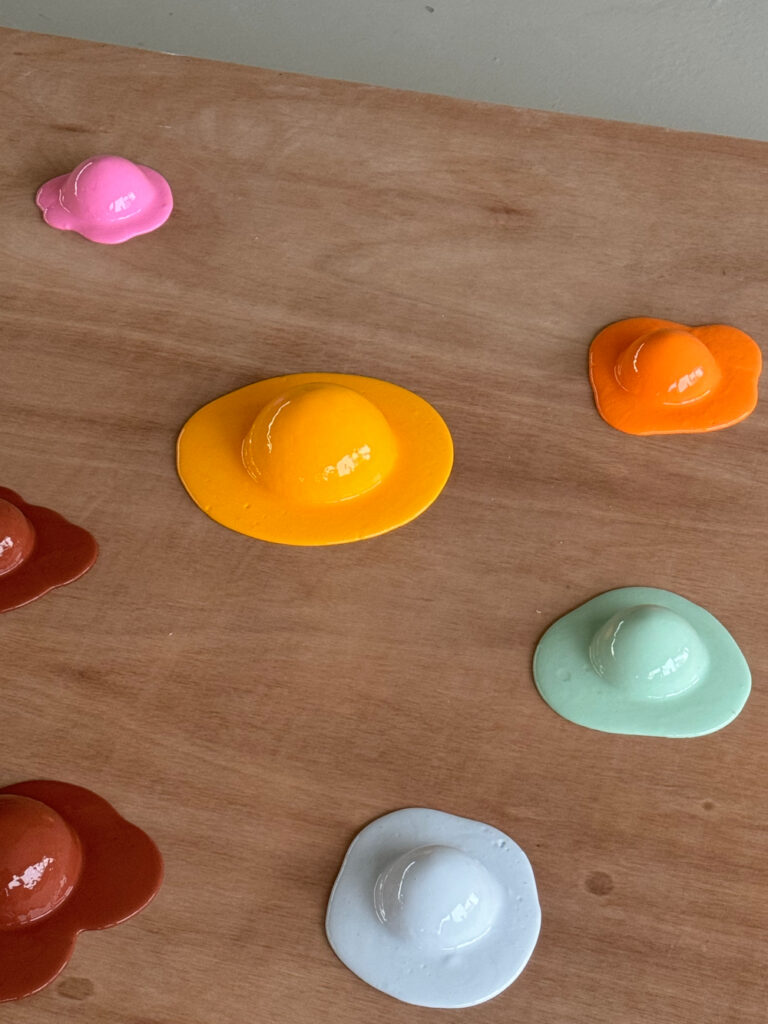
His work is very colorful, but also thick, with multiple layers. Acrylic paint works best. He adds pigments to this paint. He focuses on a good relationship between color and form. “Paint is a living thing. If you look closely, you can see the paint breathing, especially in the tiny holes in the paint.” The painting, and also the painted objects he creates, is all about the conversation the different colors trigger.
The expressive power of the material itself
He’s interested in the phenomenological experience of the material ‘paint,’ he says. “I question the form of matter traditionally used to create compositions. I distance myself from the idea of creating an image and focus on the expressive power of the material itself.”
His experiences with industrial paint, where he poured buckets of paint onto a horizontal surface and experimented with layering, play a significant role in this. “This led to the development of my own material, which allowed me to control the thickness, tonality, and texture of the paint.”
Sculptural Techniques
In Barcelona, he studied at the Escola Massana, first Industrial Design and then Sculpture. Simultaneously, he worked for over seven years as an assistant in the studio of artist Samuel Salcedo, where he learned sculptural techniques. “This helped me develop my practice with materials I had never explored before; working with an international artist allowed me to experience the discipline and daily routine of being an artist.”
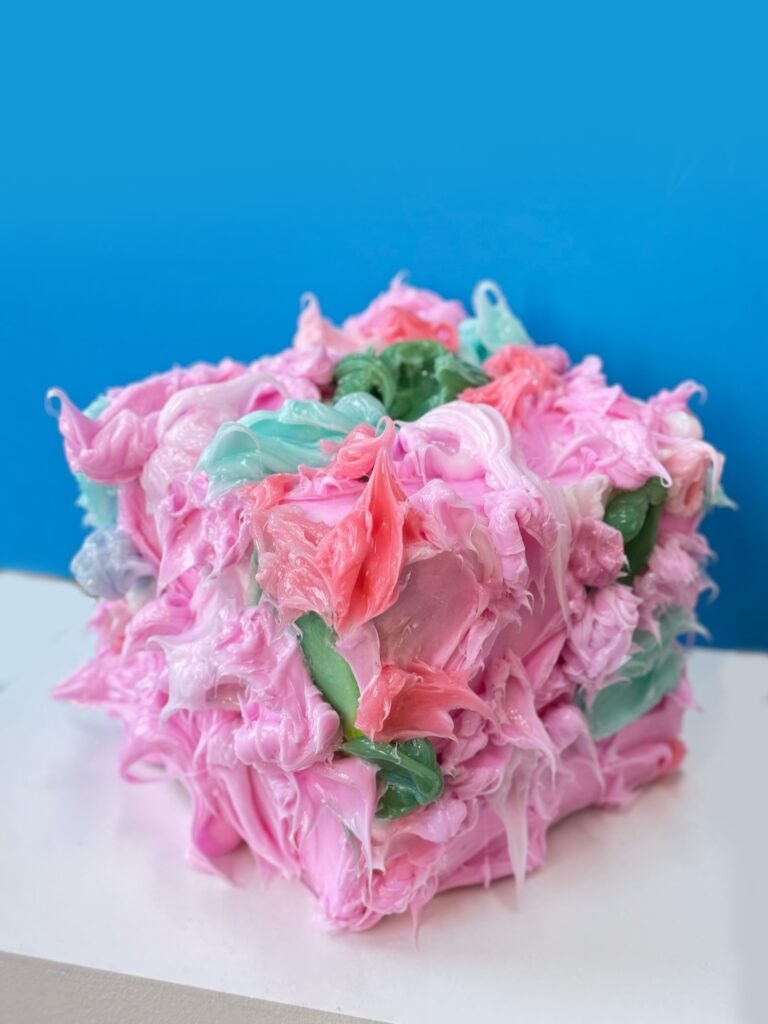
Because his training is that of a sculptor, he approaches materiality with curiosity and respect for the origins of formality, he says. “Everything begins with material. From this starting point, sculptors develop different paths, in which it is essential to maintain an ongoing dialogue with the material.”
Does Pedro have a key work within his entire oeuvre?
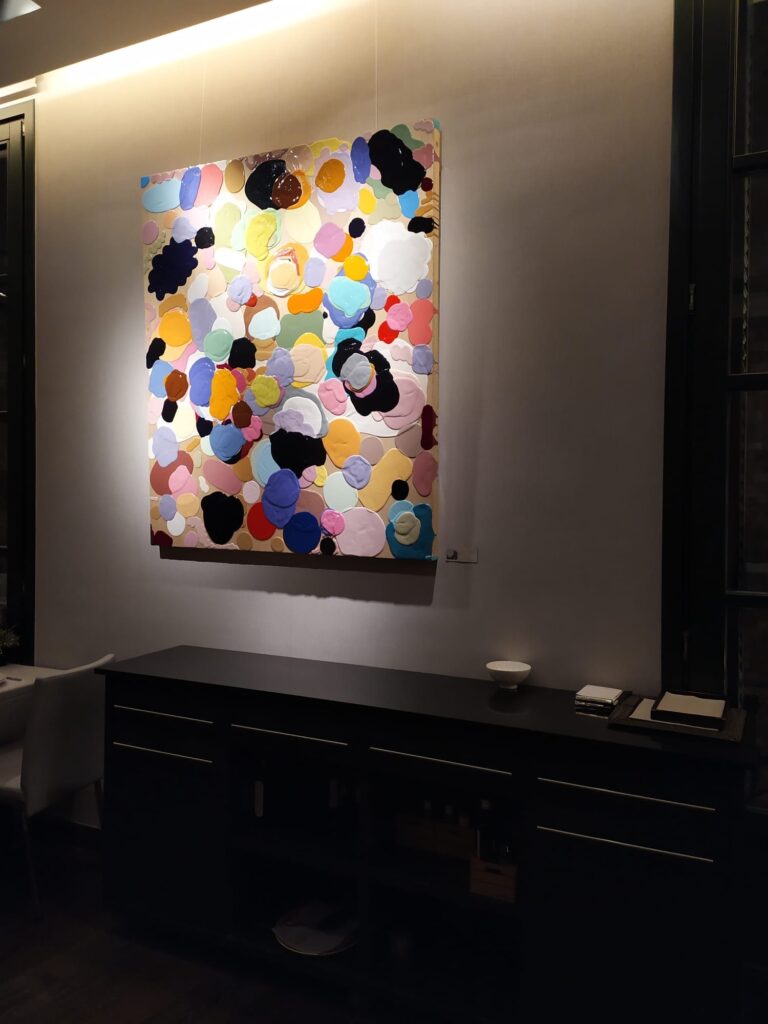
The works, in which he experimented with an exhaustive number of layers of paint, accumulate different tonalities layer upon layer, qualify. “In these works, I try to push the composition to its limits by pouring layers of paint up to 3 cm thick. The interesting thing about this process is that when I add a new color on top of existing layers, the combination changes, and a new color emerges, potentially altering its meaning.”

Psychology of Colors on Canvas
The relationship between colors and the psychology of what happens on canvas fascinates him. “Gray is a color I use as a base because it’s the most static of all; therefore, it serves as a foundation upon which other colors can express themselves in the purest and most intense way. Everything is subject to change.
Yellow is a color that radiates like the sun; the energy of red is absorbing. Many colors applied to a black background move outward from the composition and closer to the viewer. These are a few examples that demonstrate how I work with color.”
How long has he been an artist?
He has been working professionally since 2015. “Yet, I’ve always been painting or modeling. My family gave me the space to develop my creativity, and at home you can find dozens of paintings and albums from my childhood, made with crayons, watercolor, pencil, acrylic, gouache, and so on.”
During the coronavirus pandemic, he was advised to continue his development if possible, and the Netherlands might be a good option. He secured an art residency with an artist in Heesch, North Brabant. He learned a lot there, but a large city like Rotterdam offered more opportunities for artistic conversations, collaboration, and exchange. He has now been in the Netherlands for five years, but he commutes frequently between Rotterdam and Barcelona, partly due to a major exhibition of his work there.
Finally, what is his artistic philosophy?
Pedro: “My artistic practice continues to evolve, and I’m currently still searching for ways to understand what constitutes a painter’s practice. I keep asking myself questions that unfold in exercises and processes that allow me to grow, so I can achieve and fulfill my own creative goals, always guided by my intuition.”
https://www.pedrocherino.com
https://www.instagram.com/pedrocherino/?hl=nl
https://inzaken.eu/index.php/2026/01/17/pedro-cherino-laat-de-kleuren-met-elkaar-converseren/


Leave a Reply