


It is harvest time for Patricia Steur. The culmination of fifty years in photography. Starting with the release of Hungry Eyes in late 2025, her eleventh book with Andy Warhol on the cover, a book weighing no less than 3.2 kilos. And various exhibitions, beginning with a jubilee exhibition at Hotel Americain (Amsterdam) – from March 12 also featuring work by other members of the Hague rock ‘n roll Art collective The Hague (Rathpack), a major retrospective Hungry Eyes Live at the Island Gallery in The Hague from March 21 to 29, and exhibitions in Ireland on May 29, in The Hague at the beautiful Pulchri Studio on May 2, and in Sweden (the Ethnographic Museum of Gothenburg) on June 26.
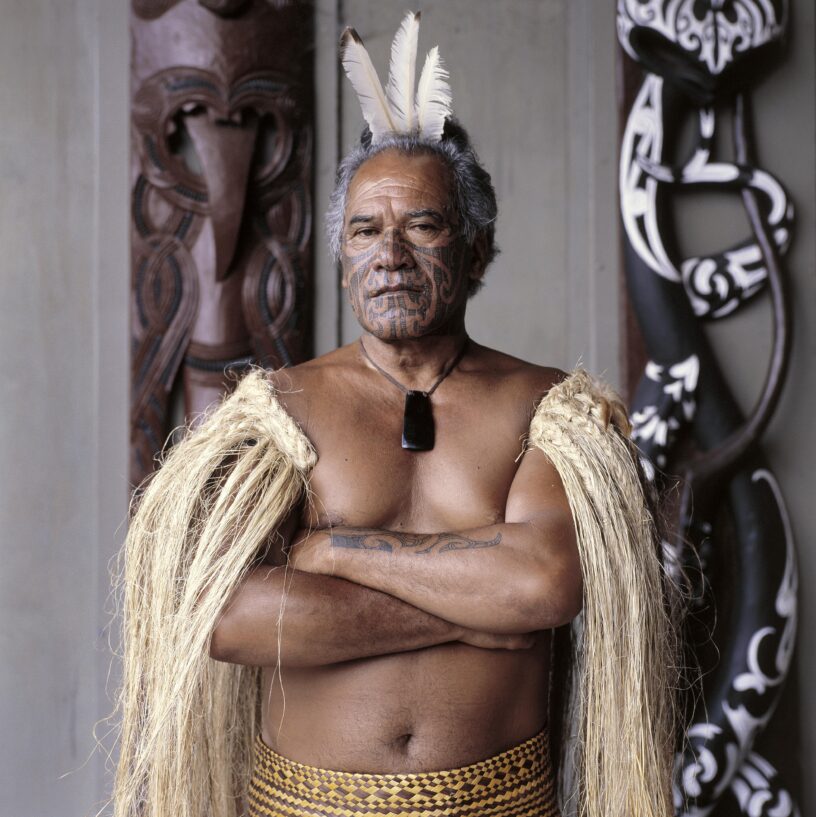
At the large wooden table in her spacious home on the edge of The Hague’s Zeeheldenkwartier, she tells me about her eventful life. I look at a large photograph of an older Maori with feathers on his head, a tattooed face, and straw wings. It turns out to be Kingi, a Maori who held a ‘high position in the clan’.
Executive Secretary
She didn’t start out as a photographer, but as an executive secretary. “After high school, I wanted to go to art school, but my parents were hesitant about that. ‘Just get a degree first, start working with that, and then see what happens.’ She obtained the Schoevers diploma and got a very good job at an American company involved in, among other things, oil drilling in the North Sea. “I could move out of the house, which I really wanted, and I could buy a car.”
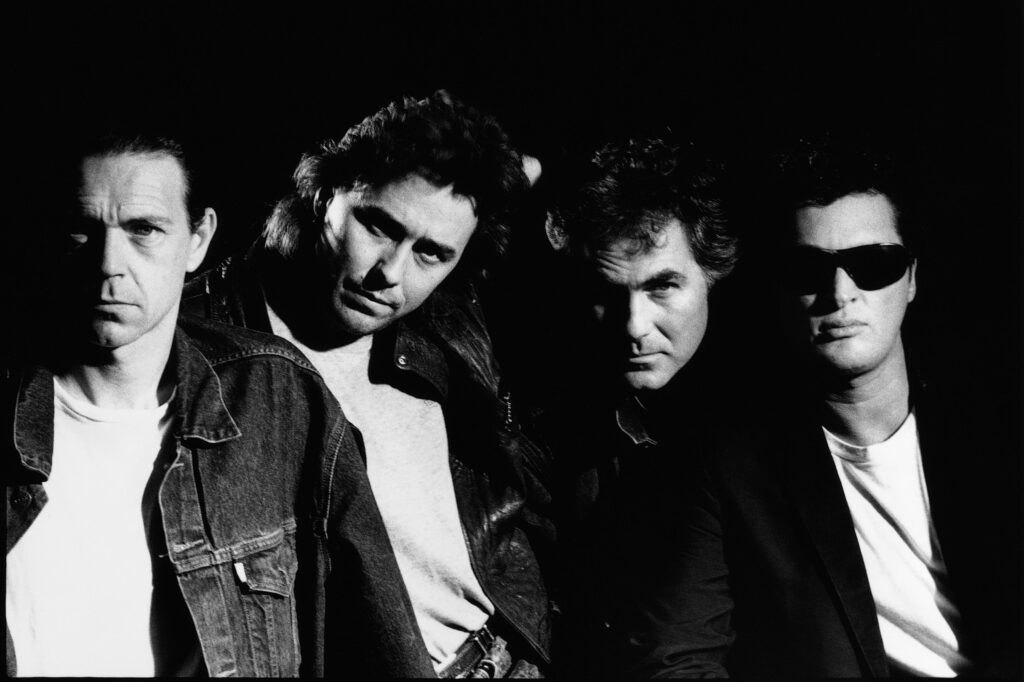
She was adventurous and curious and knew people in The Hague’s hip scene, such as Barry Hay, who had joined the band Golden Earring. When she told him that she actually wanted to go into photography, he told her that a band, ‘The Molesters’, lived above him on Barentszstraat and could use some PR. She took a photo of the band at one of the bunkers at the end of the Zwarte Pad. The photo turned out well. That strengthened her resolve to choose the path of photography.

To Amsterdam
If you wanted to advance in photography, you had to be in Amsterdam. In 1976, she moved there. She knew Claude Vanheye and started working in his studio on Hazenstraat. Vanheye was known for his intimate and iconic portraits of pop artists and top DJs. She worked long days there, six days a week, twelve hours a day. “It paid next to nothing compared to what I earned in The Hague, but I learned a lot there. And I also learned what I didn’t like.” For instance, Vanheye used a lot of light. Patricia felt that could be done differently. “The sun comes from one side. I thought it was important to keep it simple.” After three and a half years, she parted ways with Claude.
She then started taking serious photos of music performances by pop stars and bands. Initially, she stood in front of the stage. “‘Just let her through,’ my male colleagues would say, because I was the only girl. To get a better view, I stood on my metal suitcase.” She also managed to get backstage – ‘no hanky-panky’ – and even onto the stage. When Willy DeVille was in the country, he would even call her up to take photos. That is how she took a picture of him in a Citroën DS Cabrio on the Langestraat. Almost all those artists were tattooed. “I wondered: why on earth do they do that? Where does it come from? That is when I discovered indigenous tattooing.”

Sicily
In the mailbox, she found a brochure about Sicily featuring a sailing trip around the entire island. “My father had worked there. I had fond memories of that. I photographed everything for Centerfold. From press material to their record covers, etc. So we knew each other well. I was keen to do a reportage in Sicily with them; my sister also came along for the styling, as did the writer Ellen Verbeek. There were six of us. It became a sensation. Huge traffic jams in the harbors because of those Dutch ladies. The captain was warned that he had to moor the boat, on which we were all sleeping, further away from the quay for safety reasons. It did turn out to be a reportage that got the cover and a spread in Nieuwe Revu. And one of the photos won the Cannon Prize. A nice stroke of luck.”

Schiffmacher
In 1980, she met Henk Schiffmacher in the Amsterdam nightlife scene; he had set up a successful tattoo shop. He moved in with her, and she photographed various pop music clients who came to get a tattoo. They married and worked together for ten years.
Schiffmacher was a photographer himself at the time. “For Nieuwe Revu, he created a photo series about the Yakuza in Japan and another series about rock stars with tattoos. Together with him, I traveled through Asia, to the Philippines among other places. We photographed indigenous peoples, headhunters too, and discovered traditional tattoos, including those of Gordon Toi. Gordon is a Maori carver and tattoo artist from New Zealand. Schiffmacher had invited him to visit Amsterdam. I took him home and cooked dinner for him. That was so special for him that he asked me: ‘Do you want to photograph my clan?’ A year later, I was sitting with Gordon in Auckland.”

Gordon
“‘Just come along with me.’ I traveled with him for ten days. It was the journey of a lifetime. We went to his clan in northern New Zealand. I filmed and photographed everything. For example, he took me to the forest, to the place where he had to complete his master’s test as a carver for three or four months, and where he had to survive on whatever you find in the woods. After three months, he returned to civilization with a heavy thing on his back. That was his beautiful woodcarving. He took me to that spot to bury his niece’s umbilical cord. He had to ‘ground’ the child. It was very special that I, as a woman, was allowed to be there. ‘This is what I live for,’ I thought. ‘This brings me into balance with everything.’”
Paul Huf
Opposite Vanheye’s studio, on the same Hazenstraat, sat Paul Huf the master photographer, known for, among other things, the series ‘Craftsmanship is Mastery’. “Huf also printed his photos on baryta paper. And he had such a good gloss machine where you could let baryta prints dry. Much easier than gluing the baryta on and then letting it dry. I went to talk to Paul one day and asked if I could borrow his gloss machine. He thought that was fine. When I told him about my photography work, he said, ‘Talk to Freddy Heineken.’ I had made the Dream Girls series, together with Espen Hagen, the spray paint artist. Heineken came to my exhibition with Paul Huf, where he bought a work of mine. Later, I was invited by Heineken to his luxurious home. It was a pleasant conversation. The photo he had bought from the series was an image of a lady at a piano, with a keyboard painted and spray-painted over her.”
Freddy Heineken
A good friendship developed. Heineken did have some comments about her clothing: ‘Why are you wearing skateboard gear?’ He asked her if she wanted to teach him how to photograph. “Near the brewery, he owned three properties with a swimming pool on the ground floor. I had him photograph a model swimming in that pool. We walked all around the pool, looking for the right spot and the right perspective. Heineken was cautious when venturing into public spaces; it was after the kidnapping. He had himself driven in his tinted limo with three security guards inside and another car following behind. After a number of lessons, he asked, ‘What do you want?’” She didn’t actually want anything, but nevertheless, a few days later, a large crate was delivered to her address on the Nieuwe Herengracht. It turned out to be full of Heineken gadgets. Inside the crate was also a small wrapped box. Patricia opened it. It turned out to contain an attachment lens for a Hasselblad camera, with the text ‘Better for your neck’ on the piece of paper.

By then, she had divorced Schiffmacher. They remained good friends, however.
Erik Hazelhoff Roelfzema
Heineken knew her father-in-law, Erik Hazelhoff Roelfzema, the ‘Soldier of Orange’. In connection with a project about the decorated heroes of the Military William Order, she had contacted the Soldier of Orange, Erik Hazelhoff Roelfzema, knowing that he was briefly in the Netherlands. ‘Don’t tell your publisher that I’m in the Netherlands. Just come to Hawaii,’ was the response. “That sentence was life-changing. I was introduced to his son, also named Erik. He was a poet and visual artist. It was like a bolt of lightning.” For 20 years, she went to Hawaii every year to visit his parents together.

Erik Junior passed away in 2010. Six years after his death, she started a relationship with graphic artist Theo Maijenburg, with whom she wants to stay forever.

Key work
She has key works and key moments. A key work is the photo of the band The Molesters at the beach bunker in The Hague. “This was the first step.” And the photo of Kingi, the Maori in a smart suit. Also the New York series, which she did in the US. “I did street photography there, but I also took the photo of Andy Warhol.”

Key moments were the encounters with people who took her a step further. Such as Barry Hay, who led her to Amsterdam, Henk Schiffmacher, through whom she discovered the world of tattooing, and Govert de Roos, through whom she met her current husband Theo.
Fifty years as a photographer
She has been a photographer since 1976. Her father was an amateur photographer and filmmaker. “His Voigtländer stood on the mantelpiece. That is where I learned. I was looking for an excuse to get away. I went to the beach with the camera, and a little later that band, the Molesters, came along at the bunker, through Barry.
My great-grandfather was also an amateur photographer. He left behind a photo album containing, among other things, family photos. He was an engineer in South Africa for the Dutch Railways and worked on the railway line there. In that book, besides photos of the railway line, I saw photos of the indigenous population, the Zulus, including women with bare torsos. In South Africa, he met an Irish woman and my grandmother was born. After the Boer War, he went to the Dutch East Indies for the Dutch Railways.
My grandmother—half Dutch, half Irish—fell in love with an Indo; they had a child, my mother. My purely Dutch father went to New Guinea for the oil drilling. Three days before the war, he married my mother. They experienced the Japanese internment camps and survived. They got back together and had two children and a foster child.”
How would she summarize the life of a photographer?
“It is a way of life. I have to work—that is why I have photography—but I don’t actually consider it work. The same applies to musicians: They say they have to play somewhere…. Not work!”
Finally, what is her philosophy?
“Dare to dream. Dreams come true. If you want something very much, things happen that make it possible. I am very optimistic by nature. When I was 20, I needed a new passport. ‘What is your profession?’ I listed my profession as photographer, but I wasn’t a photographer yet. NLP (Neuro-linguistic programming), it is a science that works. Ultimately, I want to send people home inspired again after a workshop.”
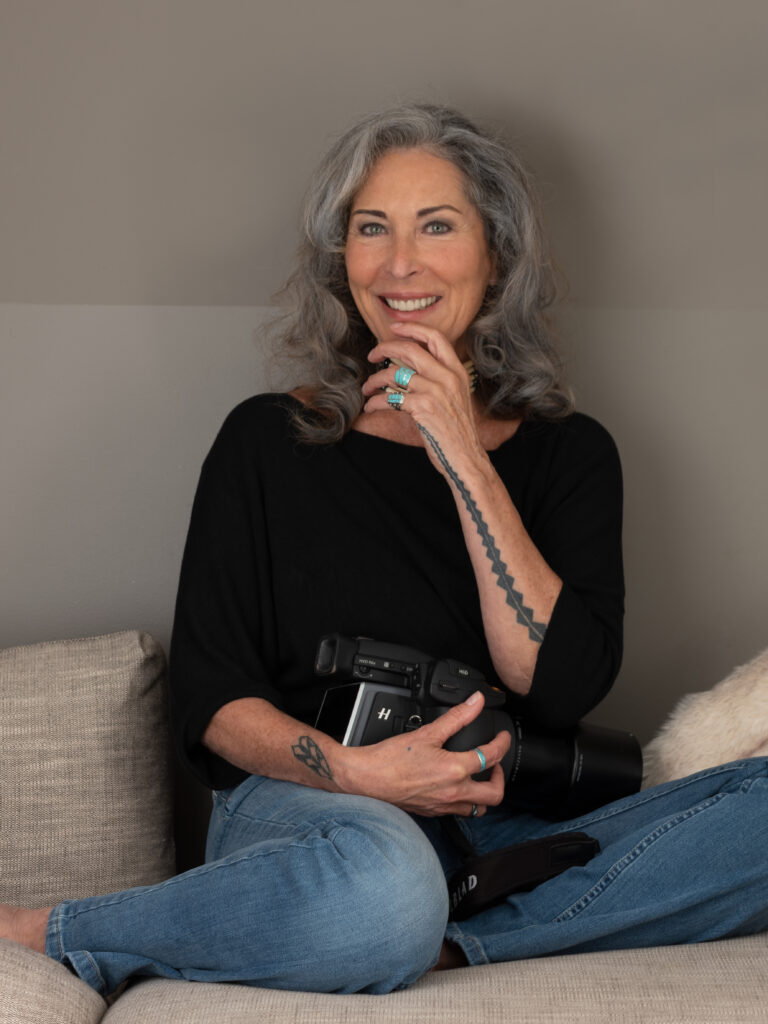
Images: 1) Kingi Taurua Tribal – 2000, Chief – in the book Selected Portraits and Dedicated by Blood, Tattooed by Gordon Toi, Location – Auckland, New Zealand, 2) band The Molesters, 3) Willy de Ville – car – 1987, Singer – in the book ‘Selected Portraits’, Tattooed by Henk Schiffmacher, Location – in a DS Citroen Cabriolet in front of my studio on Langestraat, Amsterdam, 4) Centerfold, 5) Henk Schiffmacher, 6) Freddy Heineken, 7) Erik Hazelhoff Roelfzema (sr), 8) Erik Hazelhoff Roelfzema (jr), 9) Warhol, from the book Selected Portraits, available at www.patriciasteur.com, 10) Golden Earring, 11) portrait photo of Patricia Steur by Mark Kohn.
https://patriciasteur.com/
https://www.instagram.com/patriciasteur/
https://inzaken.eu/index.php/2026/03/30/patricia-steur-durf-te-dromen-dromen-komen-uit/


Leave a Reply